


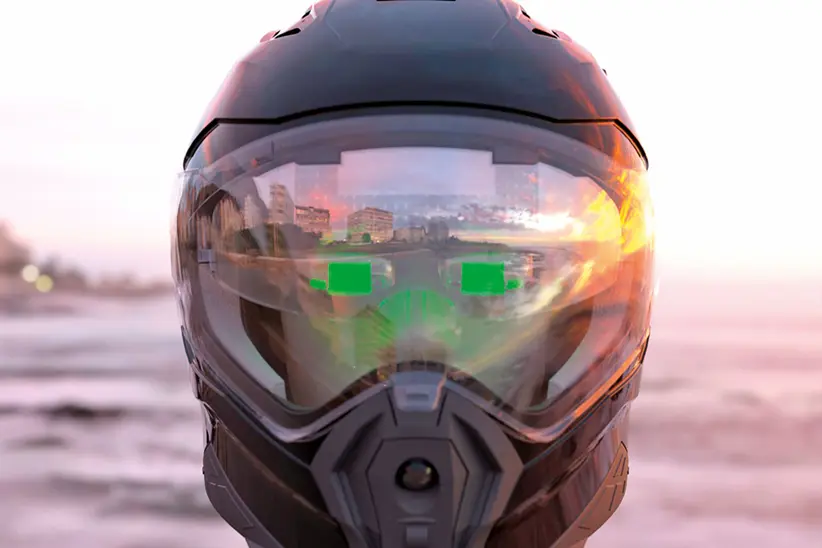
Motorcycle safety has always been a critical concern for riders around the world, and technological innovations are transforming the way riders interact with their environment. One such innovation gaining traction is the Motorcycle Helmet Head-Up Display (HUD). This technology integrates a digital display within the helmet visor, allowing riders to access essential information without diverting their attention from the road. By presenting data such as speed, navigation directions, and incoming calls directly in the rider’s line of sight, HUD-equipped helmets significantly enhance situational awareness and reduce the risks associated with distracted riding.
Modern motorcycle HUDs are designed with both safety and convenience in mind. These systems often utilize augmented reality to overlay navigation routes directly onto the rider’s view, helping them anticipate turns and hazards without constantly glancing at a separate GPS device. Advanced HUDs may also display alerts from the motorcycle’s onboard sensors, including low fuel warnings, engine status, or proximity alerts for nearby vehicles. This integration ensures that riders remain informed in real time, promoting safer riding practices and reducing the likelihood of accidents.
Connectivity plays a crucial role in the effectiveness of motorcycle helmet HUDs. Many devices now support wireless connections to smartphones, enabling hands-free communication, music playback, and voice-activated commands. This connectivity allows riders to maintain focus on the road while still enjoying modern conveniences. Additionally, some systems integrate with traffic and weather data, providing predictive alerts that further enhance safety. The ability to receive contextual information without looking away from the road is a significant leap forward compared to traditional helmets and dashboard instruments.
The adoption of motorcycle HUDs is being driven by both safety awareness and technological advancements. Companies are investing in lightweight, ergonomic designs that do not compromise comfort or aerodynamics. High-quality HUDs utilize transparent OLED or waveguide displays to provide clear visuals even in bright sunlight, ensuring readability in various riding conditions. Battery efficiency and modular design are also key considerations, allowing for extended usage without excessive weight or the need for frequent recharging. As the technology becomes more affordable and accessible, it is expected to gain popularity among both everyday commuters and sport riders seeking enhanced safety and convenience.
Beyond safety, the motorcycle helmet HUD also offers a futuristic riding experience. Riders can enjoy features such as lap timers for track enthusiasts, augmented navigation for touring, and customizable display settings to match personal preferences. The combination of practical safety functions with entertainment and performance monitoring makes HUD helmets an attractive option for tech-savvy riders. As the technology continues to evolve, we can anticipate more sophisticated integrations, including AI-assisted hazard detection and enhanced connectivity with smart infrastructure.
The Motorcycle Helmet Head-Up Display is redefining rider safety and convenience. By merging real-time information with advanced connectivity and augmented reality, HUD helmets allow riders to stay informed without distraction. As adoption grows, these systems are poised to become a standard feature in the motorcycle industry, offering an ideal balance of safety, performance, and modern technology for riders worldwide.


 Indonesia
 Arabic
 French
 Spanish
 Portuguese
 Deutsch
 Turkish
 Dutch
Dutch
 Italiano
 Russian
 Romaian
 Portuguese (Brazil)
 Greek
Greek